How Much Space Do You Need for a Home Gym?
Rule-of-thumb floor sizes for a mat corner, a dumbbell-and-bench station and a barbell setup, why the 7.2 ft bar decides the width, and how to measure your room.
Disclosure: Product links on this site aren't affiliate links: we don't earn anything from them today. If that changes, we may earn a commission at no extra cost to you, and this note will say so. Parts of this article were drafted with AI assistance and edited before publishing. Read our disclaimer.
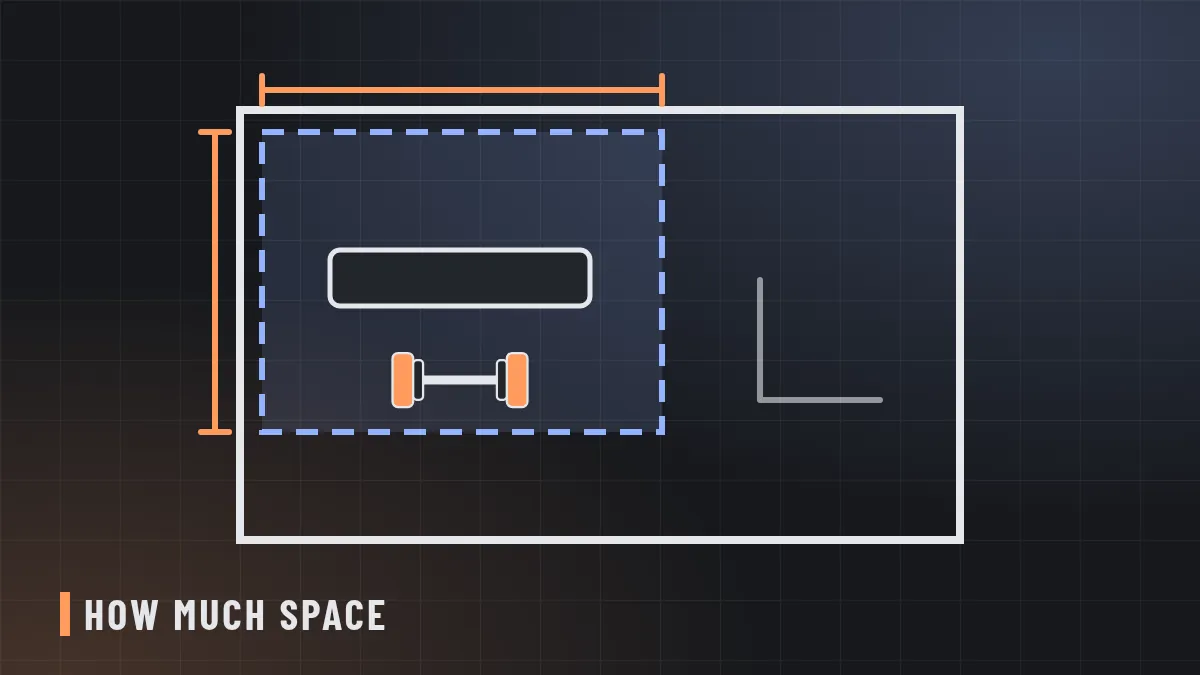
Less than you might think for dumbbells, and more than you might think for a barbell. A 6 × 6 ft patch of floor is enough for bodyweight work and a pair of dumbbells. A barbell setup needs roughly 9 × 8 ft as a bare minimum, because the bar alone is 7.2 ft long.
The sizes below are rules of thumb we use in our Home Gym Planner, not industry standards. They're a starting point for measuring; always check the listed dimensions of the gear you're considering.
Quick answer: three zone sizes
| Setup | Minimum floor | More comfortable | What decides it |
|---|---|---|---|
| Bodyweight & mat zone | 6 × 6 ft (1.8 × 1.8 m) | 7 × 8 ft | Lying down with arms out; lunges |
| Dumbbells + bench | 6 × 8 ft (1.8 × 2.4 m) | 8 × 9 ft | Bench length plus room to lower dumbbells at your sides |
| Barbell + rack or stands | 9 × 8 ft (2.7 × 2.4 m) | About 10.5 × 10 ft | The 7.2 ft bar, plus room to load plates and step back |
Not sure where you land? Enter your measurements in the planner and it will mark each zone as "Fits", "Tight fit" or "Doesn't fit".
Why dumbbells fit almost anywhere
A pair of adjustable dumbbells sits in a space smaller than a shoebox rack, and the exercises don't need much more than your body's own footprint. The real limit is the movements:
- Lying exercises (floor presses, glute bridges, core work) need your height plus a little, so about 6 ft of length for most people.
- Lunges and split squats need a long stride forward or back.
- Arms-out movements like lateral raises need roughly your arm span side to side, which for most adults is close to their height.
A flat bench adds its own length, usually around 4 ft, and you need space on each side of it to lower the dumbbells. That's where the 6 × 8 ft figure comes from.
Why a barbell needs a bigger room
The width of a barbell room is decided by the bar, not the rack:
- A standard men's Olympic bar is 2.2 m (about 7.2 ft) long. A women's Olympic bar is about 2.01 m (6.6 ft).
- You need space past each end to slide plates on and off, so with walls on both sides you want roughly 9 ft wall to wall at the very least, and 10 ft or more is much more comfortable.
- In front of the rack you need room to step back out of the hooks with a squat, and room to slide a bench in and out.
Many power racks take up roughly 4 × 4 to 4 × 5 ft of floor by themselves, while squat stands are usually smaller, but footprints vary a lot by model, so check the listing. If you also want to deadlift, a lifting platform is commonly 8 × 8 ft.
Space-saving option: folding wall-mounted racks fold flat against the wall when you're not using them. They need to be bolted into wall studs (and sometimes the floor), so they're usually not an option for renters, and the bar still needs its full width while you train.
How to measure your space
- Clear what you'll actually use. Measure the space you can dedicate, not the whole room. Furniture you'll move every session counts only if you'll really move it.
- Measure wall to wall at floor level, and note doors that swing into the area, radiators and outlets.
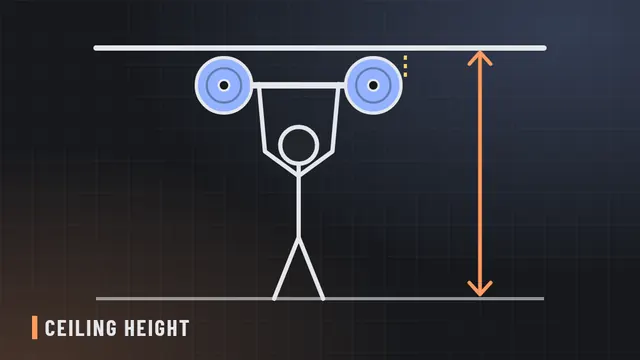
- Find the lowest ceiling point over the training area. That's its own topic: see what ceiling height you need.
- Mark it out. Painter's tape on the floor in the shape of a bench or rack footprint makes it obvious whether you can move around it.
- Check how gear gets in. A boxed rack or bench may be longer than you expect; measure doorways and stairs if you're on an upper floor.
Small-space layouts that work
- The corner: a 6 × 6 ft mat in a corner, adjustable dumbbells against one wall, bands on a hook. Everything is out of sight behind a sofa when you're done.
- The spare room: a 6 × 8 ft bench station along the longest wall, leaving the rest of the room usable.
- The single garage bay: a barbell setup facing the garage door, with the bar running across the bay's width. Check that the door, opener and rails clear the top of the rack.
Can I have a home gym in a small apartment?
Yes. A 6 by 6 ft area is enough for bodyweight exercises, resistance bands and a pair of adjustable dumbbells. Add a bench if you have about 6 by 8 ft. Use thick rubber flooring and avoid dropping weights if neighbors live below.
How wide does a room need to be for a barbell?
A standard Olympic bar is about 7.2 ft long, and you need room past each end to load plates, so plan for at least about 9 ft wall to wall, and 10 ft or more to be comfortable.
How much space does a power rack take?
Many power racks take up roughly 4 by 4 to 4 by 5 ft of floor, but sizes vary by model, so check the listing. You also need space around the rack for the bar's ends and to step back.
Next, check your headroom with our ceiling height guide, or go straight to the Home Gym Planner.