Apartment Home Gym: Flooring, Noise and Neighbor-Friendly Tips
How to protect your floor and keep the noise down in an apartment home gym, comparing rubber stall mats, gym tiles and foam, plus lease, floor-load and training-habit tips.
Disclosure: Product links on this site aren't affiliate links: we don't earn anything from them today. If that changes, we may earn a commission at no extra cost to you, and this note will say so. Parts of this article were drafted with AI assistance and edited before publishing. Read our disclaimer.
You can train at home in an apartment without becoming the neighbor everyone complains about. The recipe is boring but effective: dense rubber flooring, weights that don't need to be dropped, and lifts done under control. Mats reduce noise; they don't make dropped weights silent.
This guide is research-based and general. Buildings differ, so check your lease and building rules before you set up, and ask your landlord before attaching anything to walls or floors.
Two kinds of gym noise
- Airborne noise: music, talking, the clank of plates. Mostly a problem for the people next door, and the easiest to fix: turn it down, use rubber-coated plates and dumbbells, and don't let metal hit metal.
- Impact noise: a dumbbell set down hard, a jump, a dropped kettlebell. It travels through the floor structure into the ceiling below, and it's the one that causes complaints. Flooring helps, but your habits help more.
Flooring options compared
| Option | Typical thickness | Good for | Watch out for |
|---|---|---|---|
| Rubber stall mats (often 4 × 6 ft) | 3/4 in | Dumbbells, benches, racks; very durable | Heavy (often around 100 lb each), rubber smell at first |
| Interlocking rubber gym tiles | Often 3/8 to 3/4 in | Easy to carry and fit to odd rooms | Seams can shift; thinner tiles do less for impact |
| EVA foam puzzle mats | Often around 1/2 in | Bodyweight work, stretching, yoga | Too soft for heavy weights; dents and tears |
| Rubber rolls | Often 1/4 to 3/8 in | Clean look over large areas | Thin rolls are mainly floor protection, not noise control |
For an apartment, 3/4 in rubber is a sensible minimum under anywhere weights might touch the floor. New rubber mats can smell for a while, so air them out on a balcony or in a garage if you can before bringing them in. Rough prices for rubber flooring run about $2–$4 per square foot; check current prices.
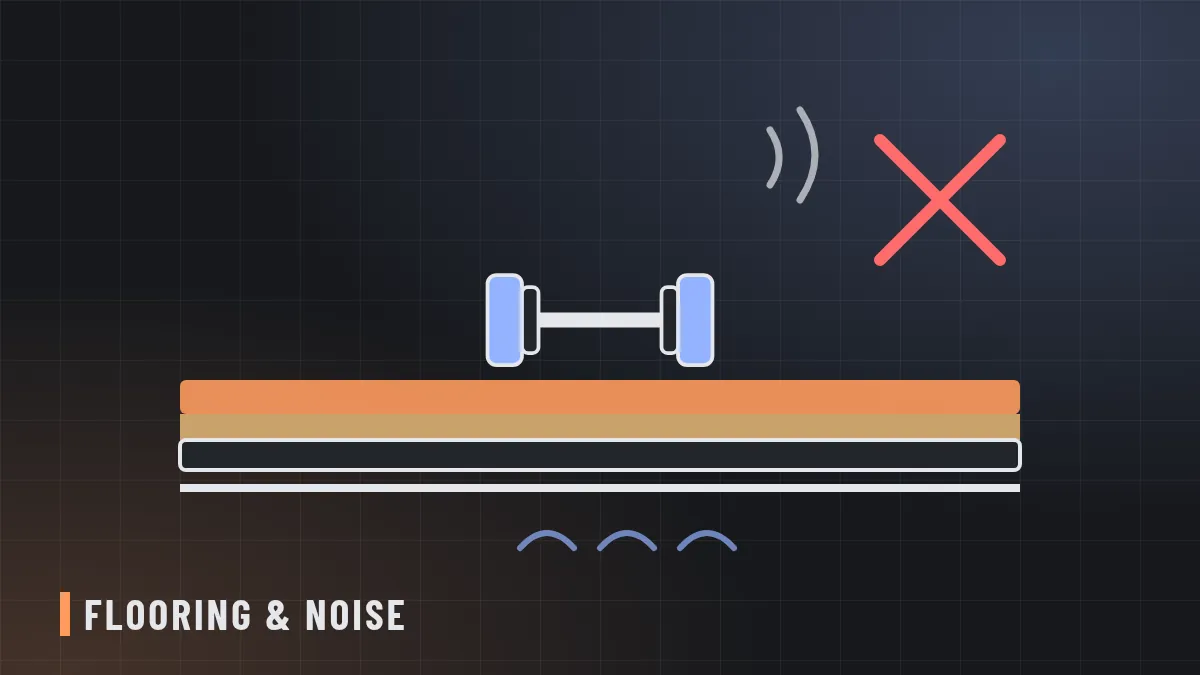
Layering for more impact protection
If you do need to set down heavier weights, more layers help:
- A soft layer on the bottom (foam or thinner rubber) to absorb impact.
- A rigid layer (such as plywood) to spread the load over a wider area.
- A dense rubber top layer to protect the wood and grip your shoes.
This is the same basic idea as a DIY lifting platform. Keep it flat and stable, and make sure it doesn't create a trip edge.
Choose quieter equipment
- Adjustable dumbbells mean one pair instead of a rack of steel. Some types aren't designed to be dropped, so set them down gently; see our adjustable vs fixed dumbbells guide.
- Rubber- or urethane-coated dumbbells, kettlebells and plates are quieter than bare iron.
- Resistance bands are almost silent.
- Skip the jump rope and box jumps if someone lives below you, or save them for outdoors.
- A barbell can work in some apartments, but only with a proper platform and fully controlled lifts. Never drop a barbell on an upper floor. Our Home Gym Planner defaults to a dumbbell-first setup when you tick "Keep it quiet".
Habits that matter more than mats
- Lower weights under control and place them, don't drop them, especially at the end of a set when you're tired.
- Pick exercises that keep weights off the floor between reps.
- Train at reasonable hours. Check your building's quiet hours.
- Talk to your downstairs neighbor. Asking "let me know if you ever hear anything" goes a long way.
Floor load and your lease
Homes in the U.S. are typically designed for everyday floor loads of roughly 30 to 40 pounds per square foot, spread across the room. A pair of dumbbells and a bench is a normal household load. A heavy rack, a full plate tree or a big stack of weights concentrated in one spot is different, and worth asking your landlord, building manager or a structural engineer about before you set it up, especially in older buildings.
Also check your lease or building rules for anything about exercise equipment, noise and changes to the unit. Freestanding gear you can take with you is usually the easiest thing to get approved.
What is the best flooring for an apartment home gym?
For most apartment setups, 3/4 inch rubber, as stall mats or thick interlocking tiles, is a good starting point. Foam puzzle mats are fine for bodyweight work but too soft for heavy weights.
Will gym mats stop my downstairs neighbors hearing me?
They reduce impact noise but won't make dropped weights silent. The biggest difference comes from lowering weights under control, using rubber-coated gear and skipping jumping exercises.
Can I use a barbell in an apartment?
Sometimes, with a solid platform and controlled lifts, and only if your lease and building allow it. Never drop a barbell on an upper floor. For most apartments, dumbbells are the simpler choice.
Measure your space and get a quiet-friendly starter list with the Home Gym Planner, or read how to start a home gym on a budget.