Flat vs Adjustable Weight Bench: Which Do You Need?
How flat and adjustable weight benches compare on exercises, stability, footprint, storage and cost, plus what to check before you buy a bench for a small home gym.
Disclosure: Product links on this site aren't affiliate links: we don't earn anything from them today. If that changes, we may earn a commission at no extra cost to you, and this note will say so. Parts of this article were drafted with AI assistance and edited before publishing. Read our disclaimer.
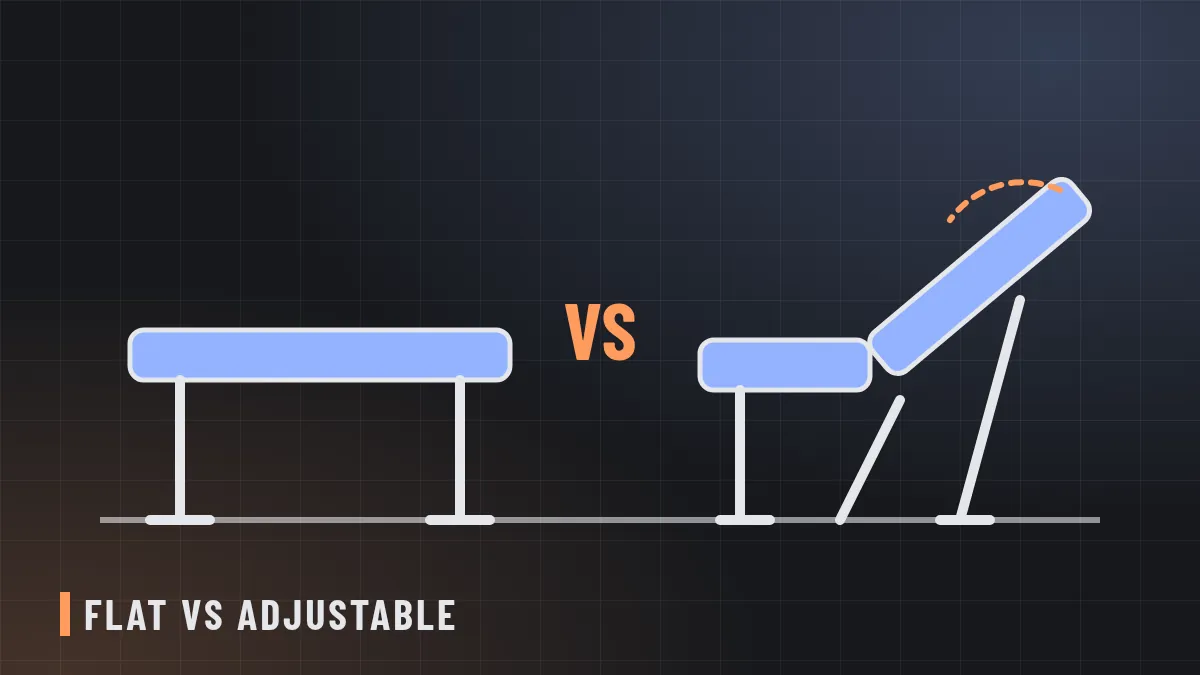
If you train mostly with dumbbells, an adjustable bench is usually worth the extra cost, because the incline and upright positions add exercises and let you press seated under a low ceiling. If you'll mainly bench press with a barbell in a rack, or the budget is tight, a sturdy flat bench does the job and is often more stable.
This comparison is research-based, drawing on manufacturer specifications and manuals, not hands-on testing of specific models. Prices are rough ranges for new benches in the U.S.; check the current price.
The short version
| Feature | Flat bench | Adjustable bench |
|---|---|---|
| Rough new price | Roughly $70–$200 | Roughly $150–$400 |
| Positions | Flat only | Flat, several inclines, often upright; some decline |
| Stability | Usually very stable; one pad, fewer joints | Varies; check the gap between pads and any wobble |
| Weight | Lighter models are easy to move | Usually heavier |
| Storage | Some stand on end or slide under a rack | Some fold or stand upright; check the listing |
| Best for | Barbell bench press, rows, step-ups, budgets | Dumbbell-based home gyms, low ceilings |
What a bench actually unlocks
Even a basic flat bench adds a lot to a pair of dumbbells:
- Flat dumbbell presses
- One-arm dumbbell rows with a hand on the bench
- Step-ups and Bulgarian split squats with the rear foot on the bench
- Hip thrusts with your upper back on the bench
- Seated curls and seated overhead presses (on a bench with an upright back, or a flat bench without back support)
An adjustable bench adds incline presses, chest-supported rows (lying face down on an incline) and a supported seated press, which matters in a small room. A seated press takes a foot or more off the headroom you need compared with pressing standing, so if your ceiling is low, an upright back position is valuable. Our ceiling height guide has the numbers.
Flat benches
- Pros: cheaper; fewer moving parts; usually stable and solid; often lighter and easier to stand on end; good for a barbell bench press in a rack.
- Cons: no incline or upright positions; seated presses have no back support.
Many lifters who mainly train the barbell lifts like a flat bench for benching because there's no gap between pads and nothing to adjust. If you'll bench press in a rack, check the bench's height and width suit you, and that it fits between the rack's uprights if you plan to roll it in.
Adjustable benches
Adjustable benches are sometimes called FID (flat, incline, decline) or FI (flat, incline) benches.
- Pros: many more exercises; upright position for seated presses; one bench covers most dumbbell routines.
- Cons: more expensive; heavier; can have a gap between the seat and back pads in flat position, which some people find uncomfortable; more joints that can develop wobble.
Things to check before you buy:
- How many positions, and how they adjust. A ladder or pop-pin system with several incline steps gives you more control than two or three positions.
- The pad gap in flat position. Smaller is more comfortable for flat pressing.
- Whether the seat adjusts too. A seat that tilts up stops you sliding down on steep inclines.
- Decline. A decline position usually needs a leg holder, adding length and cost. Most beginners don't need it.
What to check on any bench
- Weight rating. Look for a listed capacity that covers your body weight plus the heaviest weight you'll hold, with room to spare. Ratings vary a lot between models.
- Footprint. Benches are commonly around 4 to 4.5 ft long and need room around them to move. Plan roughly 6 × 8 ft for a dumbbell-and-bench station, as in our space guide.
- Height. Many flat benches are around 17 in tall; powerlifting rules set a maximum of 45 cm (about 17.7 in). Too high and your feet may not plant flat when pressing.
- Pad width and firmness. Wider, firmer pads feel more stable on your back.
- Stability and feet. Rubber feet stop it sliding on mats. Push on the corners when it arrives to check for wobble.
- Storage. If the bench must disappear after each workout, look for wheels and a handle, or a model that stands on end.
Buying used? Check for cracked welds, a bent frame, wobbly adjustment pins and torn padding, and find the model name so you can look up its rating and manual.
Which should you choose?
- Dumbbell-based gym in a spare room or apartment: adjustable. It gets the most from one pair of dumbbells and gives you a seated press for low ceilings.
- Barbell gym with a rack: a sturdy flat bench is enough to start; add an adjustable bench later if you want inclines.
- Very tight budget: a solid flat bench, possibly used. Buy a better one later.
Not sure a bench is next on your list? See what to buy first, or enter your room in the Home Gym Planner to see whether a bench station fits. Our beginner dumbbell routine shows how a bench gets used.
Do I need an adjustable bench?
Not to get started. A flat bench covers presses, rows, step-ups and split squats. An adjustable bench adds inclines and a supported seated press, which helps most in dumbbell-based gyms and rooms with low ceilings.
What weight capacity should a bench have?
At least your body weight plus the heaviest weight you'll hold or put on a bar, with plenty of margin. Check the manufacturer's listed rating, since benches at similar prices can be rated very differently.
Is a flat bench better for bench pressing?
Many lifters prefer a flat bench for the barbell bench press because there's no gap between pads and fewer joints to wobble. A good adjustable bench in its flat position also works if the pad gap is small and it feels stable.